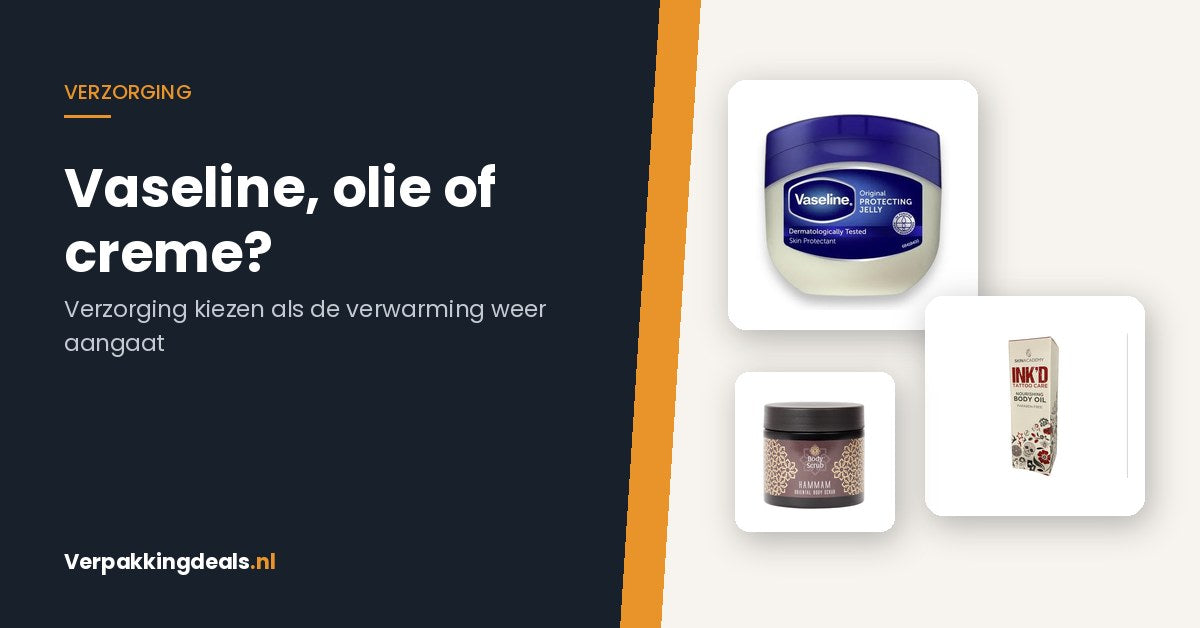
Vaseline, oil, or cream? How to choose the right skincare for the heating season
,
by Verpakkingdeals.nl
5 min reading time
As soon as the heating comes on, your summer products work less effectively. A clear comparison of petroleum jelly, cream, body butter, and oil — and when to use which.
In mid-September, most people turn on their heating for the first time, and within a week, you notice it: hands feeling tight after washing dishes, chapped spots on shins and elbows, lips cracking. The light body lotion that worked perfectly all summer suddenly feels like it's doing nothing.
This isn't because your skin has suddenly changed. It's because heated indoor air is drier than outdoor air, and because you're coming into contact with warm water more often. The solution isn't a more expensive jar, but a different type of product at the right time. Below are the differences summarized.
Vaseline: thick, greasy, and very few ingredients
Vaseline (petroleum jelly) is not a cream. It doesn't absorb but stays on the skin as a layer. That's precisely why it's useful for small, stubborn spots: lips, knuckles, heels, a chapped spot next to the nose during cold weeks. You use it in small quantities and don't spread it over large areas, as it will feel sticky and stain clothes.
Body lotion and body butter: the difference is in the thickness
A lotion contains relatively more water, absorbs quickly, and is pleasant if you want to get dressed immediately afterward. A body butter is thicker, remains noticeable for longer, and is intended for areas that feel truly dry. In practice, many people use both: lotion on arms and shoulders, butter on legs and elbows.
Examples from the assortment: Body Butter Banana Scent 200 ml (€9.95) and Body Butter Passion Fruit 200 ml (€7.00). With these types of products, pay particular attention to the scent: a distinct fruity scent all over your body at eight in the morning is different from in the evening. If in doubt, start with the smallest size.
Oil: best right after showering
Body oil works differently from cream. You apply it to still-damp skin, immediately after towel-drying, and massage it in briefly. On dry skin, oil tends to glide over rather than stay put. Allow a little more absorption time before getting dressed — five minutes in a bathrobe will save your sweater from a greasy back.
A scrub removes loose skin flakes, allowing subsequent products to lie more evenly on the skin. During the heating season, the temptation to scrub more often because the skin feels rough is strong — but even then, once a week is usually enough, and you should skip it on chafed or shaved skin.
Packaging and size: what to consider when ordering
Jar or tube? A jar is convenient for thick products you scoop with your fingers, a tube stays cleaner and is better for on the go.
Large size only if you'll finish it. Opened care products have a shelf life after opening — indicated by the jar with lid symbol and "12M" or "24M" on the packaging.
Choosing a USB hub for working from home: 2.0 or 3.0, how many ports, and with switches
· 3 min reading time
Choosing a USB hub for working from home: 2.0 or 3.0, how many ports and with switchesYour desk needs three USB devices, but your laptop only has two ports. Or...
Power outages in autumn: emergency supplies you'll actually use
· 2 min reading time
Autumn Power Outages: Emergency Supplies You'll Actually Use October to December. Heating isn't in full swing yet, but the nights are getting long and cold. If a power outage strikes...
Choosing a power bank: capacity, charging speed, and weight compared
· 2 min reading time
Choosing a Power Bank: Capacity, Charging Speed, and Weight Compared Your phone dies when you're out and about. The classic emergency solution is a power bank. But what capacity do...